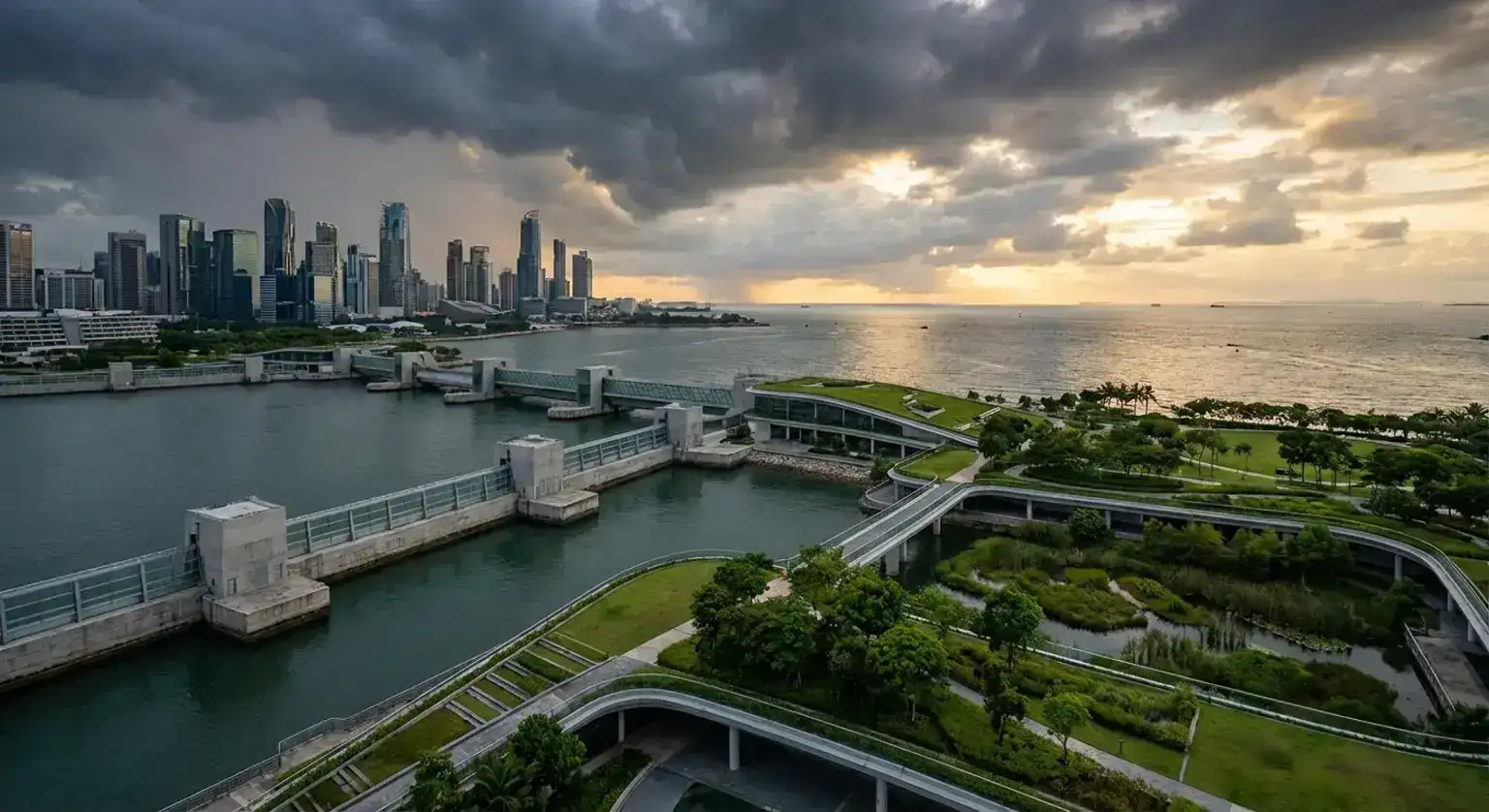
Climate Change Adaptation
Building resilience to physical climate risks through adaptation solutions for infrastructure, buildings, and economic activities.
Climate change adaptation is the second environmental objective in Regulation (EU) 2020/852. Article 11 recognises two routes to substantial contribution: implementing solutions that substantially reduce the most important physical climate risks to an activity, or providing solutions that substantially reduce physical climate risks for other activities, people, nature, or assets. Those solutions must not increase risk elsewhere.
Delegated Regulation (EU) 2021/2139, as amended, sets activity-specific technical screening criteria. Where those criteria invoke Appendix A, the assessment has three legal steps: screening hazards from its indicative, non-exhaustive list; assessing materiality where a hazard may affect the activity; and assessing adaptation solutions for identified risks. Projection scale and scenarios are proportionate to the activity's scale and expected lifespan. The regulation does not prescribe CFD or any other particular modelling tool.
Taxonomy alignment is determined for a specific activity and also requires the applicable DNSH criteria and minimum safeguards. This site's examples are a curated guide subset; consult the official EU Taxonomy Compass and the current consolidated legal acts for the complete inventory and binding wording.
Climate Adaptation for Buildings
Where Appendix A applies, its three assessment steps are proportionate to the activity's scale and expected lifespan. CFD can provide optional site-specific microclimate evidence when local risks are material; the Taxonomy does not prescribe it.
Sectors Contributing to This Objective
These sectors include activities that can make a substantial contribution to this environmental objective.
Forestry
4 activities
Arts, Entertainment & Recreation
2 activities
Construction & Real Estate
7 activities
Education
1 activities
Energy
15 activities
Environmental Protection & Restoration
3 activities
Financial & Insurance
2 activities
Health & Social Work
1 activities
Information & Communication
4 activities
Manufacturing
16 activities
Professional, Scientific & Technical
3 activities
Transport
13 activities
Water Supply, Sewerage & Waste
6 activities
Explore All Objectives
Understand how the six objectives work together to define environmental sustainability.