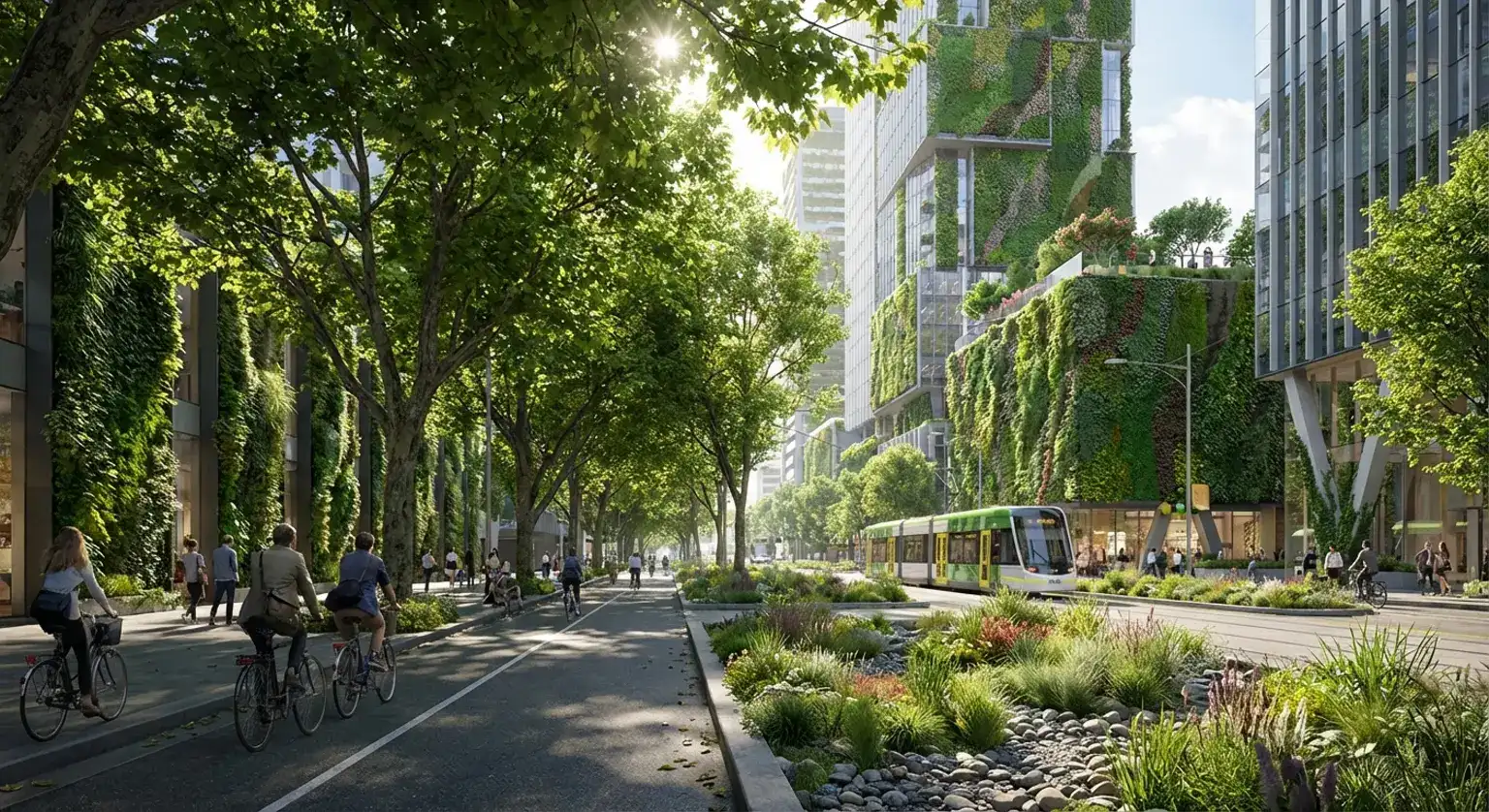
Nature-Based Solutions
Where Appendix A applies, adaptation measures should consider nature-based solutions or rely on blue or green infrastructure to the extent possible.
Types of Nature-Based Solutions
Green Roofs
Vegetated roof systems that reduce surface temperatures compared to conventional roofs. They provide insulation, stormwater retention, and biodiversity habitat.
Green Facades
Climbing plants or modular green wall systems on building exteriors. They reduce wall surface temperatures and improve air quality through particulate capture.
Urban Trees
Street trees and urban canopy provide shade, evapotranspiration cooling, and beneficial wind modification.
Bioswales & Rain Gardens
Landscaped drainage channels that capture and filter stormwater runoff. They reduce flood risk while supporting vegetation and groundwater recharge.
Permeable Pavements
Porous surfaces that allow rainwater to infiltrate rather than run off. They reduce flooding and lower surface temperatures.
Water Features & Retention
Ponds, fountains, and retention basins provide evaporative cooling and support stormwater management.
Cool / Reflective Surfaces
High-albedo materials for roofs, walls, and pavements reflect solar radiation rather than absorbing it, reducing surface temperatures.
How NBS Align with the Taxonomy
Nature-based solutions can contribute to multiple environmental objectives at the same time.
Climate Adaptation
Cooling, shading, and flood mitigation directly address physical climate risks identified in the CRVA.
Biodiversity
Green roofs, urban trees, and bioswales create habitat corridors and support urban biodiversity.
Water & Marine Resources
Permeable surfaces and rain gardens reduce runoff, improve water quality, and recharge groundwater.
Circular Economy
Nature-based solutions often use fewer manufactured materials than grey infrastructure alternatives, reducing resource consumption.
Evaluating NBS Effectiveness
Where the applicable criteria invoke Appendix A, adaptation solutions should be supported by proportionate evidence. Before implementing NBS, quantify their expected impact. Key metrics include:
CFD simulation can model these metrics before construction begins by comparing baseline conditions against multiple NBS scenarios.
Model NBS Effectiveness Before You Build
CFD can optionally compare modelled effects of green roofs, urban trees, and cool surfaces before implementation when that analysis is proportionate. Whether the outputs support review depends on the documented method, inputs, assumptions, limitations, and applicable criteria.