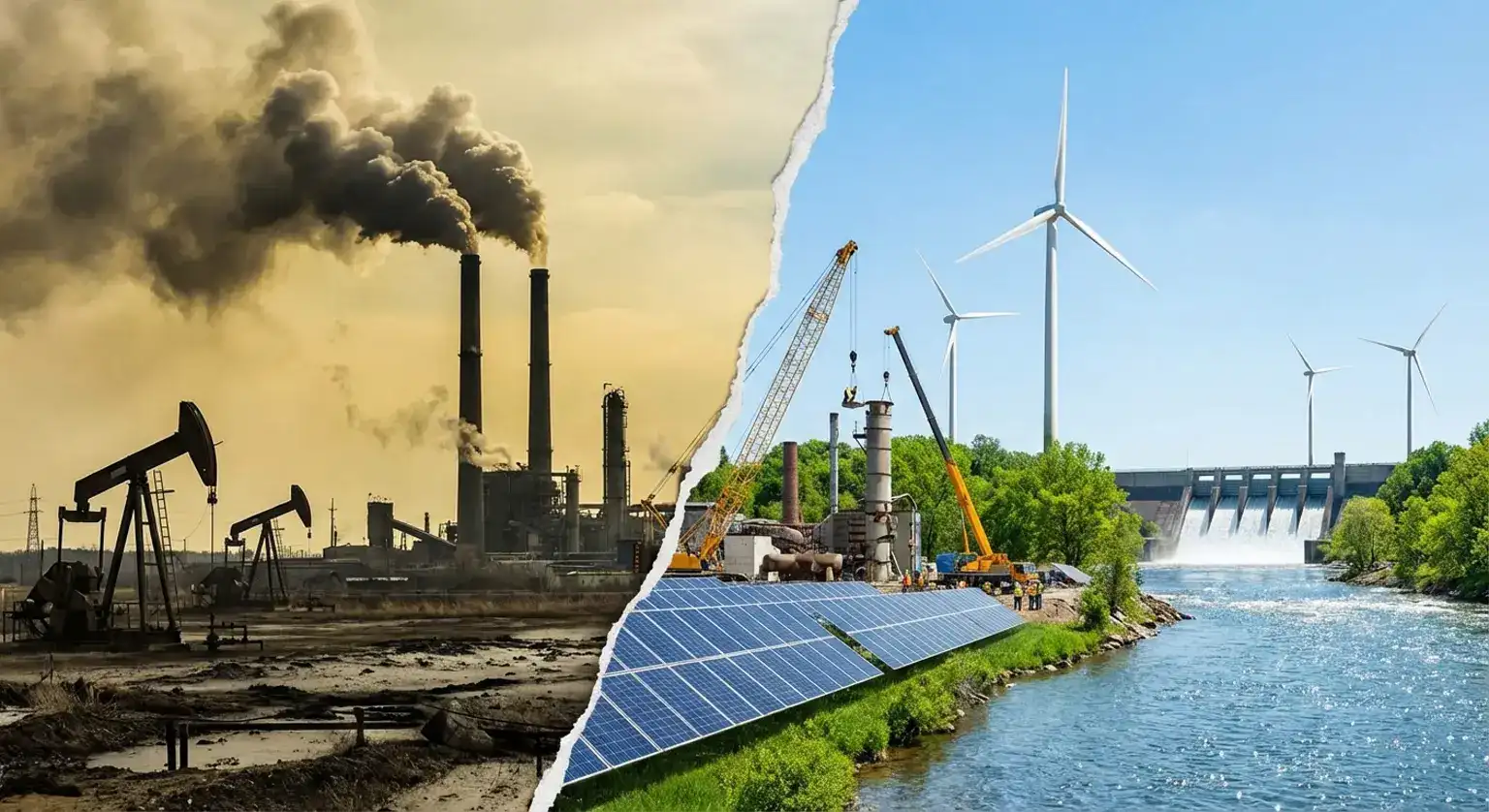
Pollution Prevention & Control
Preventing and controlling emissions of pollutants to air, water, and soil, and minimising exposure to hazardous substances.
Pollution prevention and control is the fifth environmental objective of the EU Taxonomy. It addresses the release of pollutants into air, water, and soil, as well as the adverse effects of chemicals and hazardous substances on human health and the environment. The objective is rooted in the EU Zero Pollution Action Plan, the Industrial Emissions Directive, and the REACH Regulation, and it supports the broader European ambition of achieving a toxic-free environment by 2050.
An economic activity can substantially contribute to this objective by preventing or, where that is not practicable, reducing pollutant emissions to air, water, or soil other than greenhouse gases. This includes preventing or minimising the adverse effects of the production, use, or disposal of chemicals; cleaning up litter and other forms of pollution; and enabling any of these outcomes through the development of new technologies, processes, or products. The Environmental Delegated Act of June 2023 establishes the specific technical screening criteria, which require activities to demonstrate measurable reductions in pollutant releases below the levels mandated by existing EU legislation.
The technical criteria for pollution prevention activities are often closely connected to industrial processes and manufacturing. For example, activities related to the manufacture of chemicals must demonstrate pollutant release levels significantly below the Best Available Techniques Associated Emission Levels (BAT-AELs) established under the Industrial Emissions Directive. Activities related to the remediation of contaminated sites must achieve measurable reductions in pollutant concentrations and prevent the further migration of contaminants. Transport-related activities must meet stringent emission standards for particulate matter, nitrogen oxides, and other non-greenhouse-gas pollutants.
The DNSH criteria for this objective, when it is not the primary objective of substantial contribution, typically require that activities comply with the relevant provisions of the Industrial Emissions Directive and REACH Regulation. Companies must ensure that their products and processes do not contain substances of very high concern (SVHCs) above concentration limits and that they do not impede the recycling of waste streams through the introduction of hazardous substances. This objective interacts strongly with the circular economy and water objectives, reflecting the interconnected nature of environmental challenges.
Sectors Contributing to This Objective
These sectors include activities that can make a substantial contribution to this environmental objective.
Explore All Objectives
Understand how the six objectives work together to define environmental sustainability.