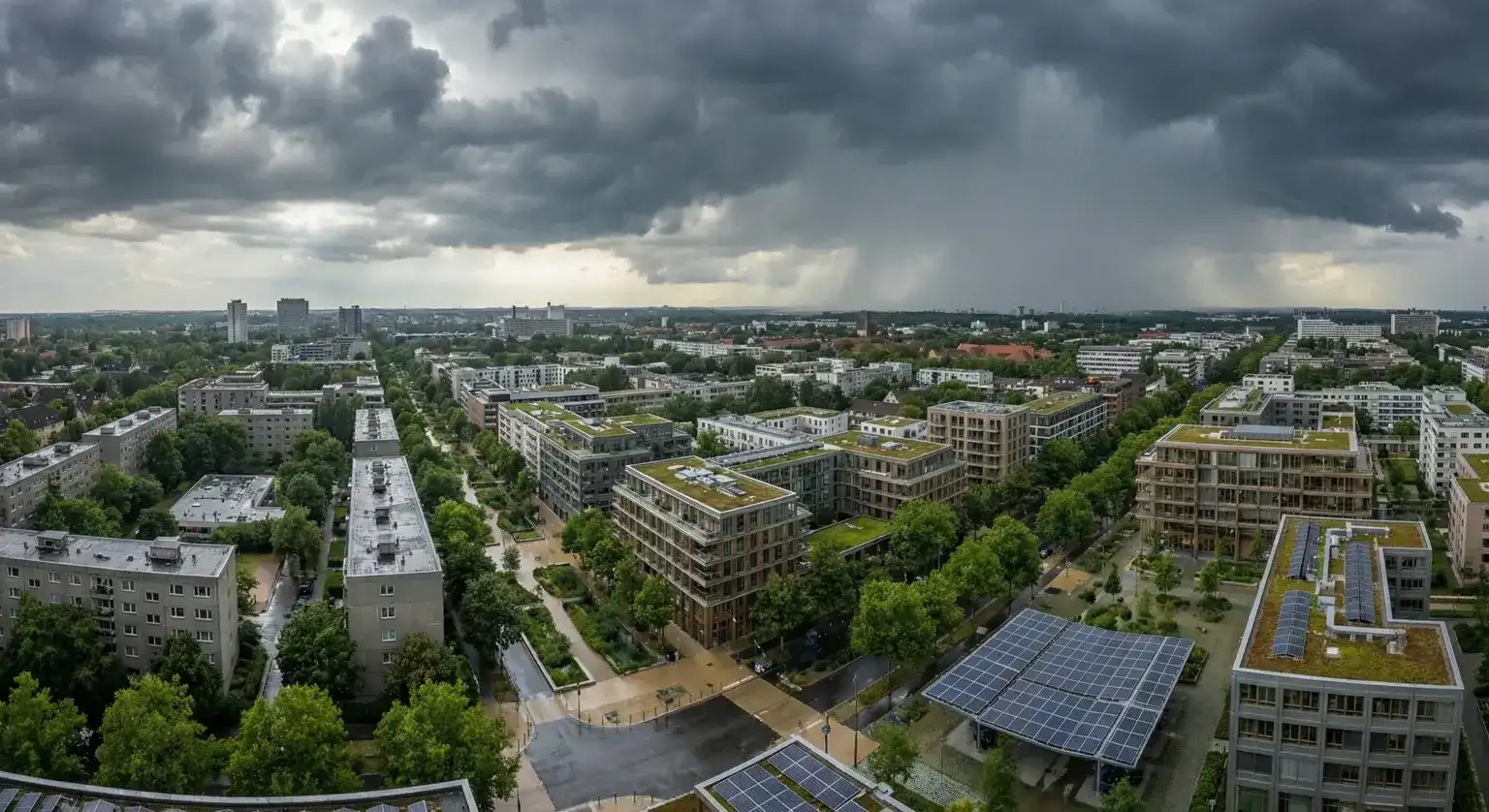
Climate Adaptation & Buildings
When a building activity seeks taxonomy alignment under technical screening criteria that incorporate Appendix A, it must assess relevant physical climate risks and adaptation solutions. The applicable activity-specific criteria determine the required scope.
Why This Matters for Buildings
Where activity-specific criteria address climate adaptation or adaptation-related DNSH, relevant physical climate risks must be assessed over the activity’s expected lifetime.
When Appendix A applies, the assessment uses forward-looking climate projections; historical observations may provide context but do not replace them.
Appendix A makes resolution proportionate to scale and expected lifespan: under 10 years, the smallest appropriate scale; for longer-lived activities, the highest available resolution across a suitable scenario range. CFD is optional where local wind or heat is material.
A Practical Assessment Flow
Explore the Topics
Each section explores evidence relevant when activity-specific criteria invoke a CRVA. Start with the applicable technical screening criteria.
Climate Risk & Vulnerability Assessment
Appendix A sets three assessment steps: screen hazards, assess material risks, and assess adaptation solutions. The page presents a practical six-part implementation view.
Physical Climate Risks
Chronic and acute hazards the taxonomy identifies: heat stress, flooding, wildfire, drought, sea level rise, and 20+ more.
Urban Heat Island Effect
Why cities can be hotter than surrounding areas, and when site-specific evidence may help assess a material local heat risk.
Nature-Based Solutions
Green roofs, urban trees, permeable surfaces, and other adaptation measures. How to evaluate their effectiveness.
CFD Simulation for CRVA Support
How computational fluid dynamics can optionally add building-level wind and thermal detail when proportionate to material local risks.
Need Microclimate Analysis?
Where local microclimate is material and site-level detail is proportionate, CFD can complement climate projections and engineering judgement with 3D wind and thermal comparisons. Appendix A does not require it.